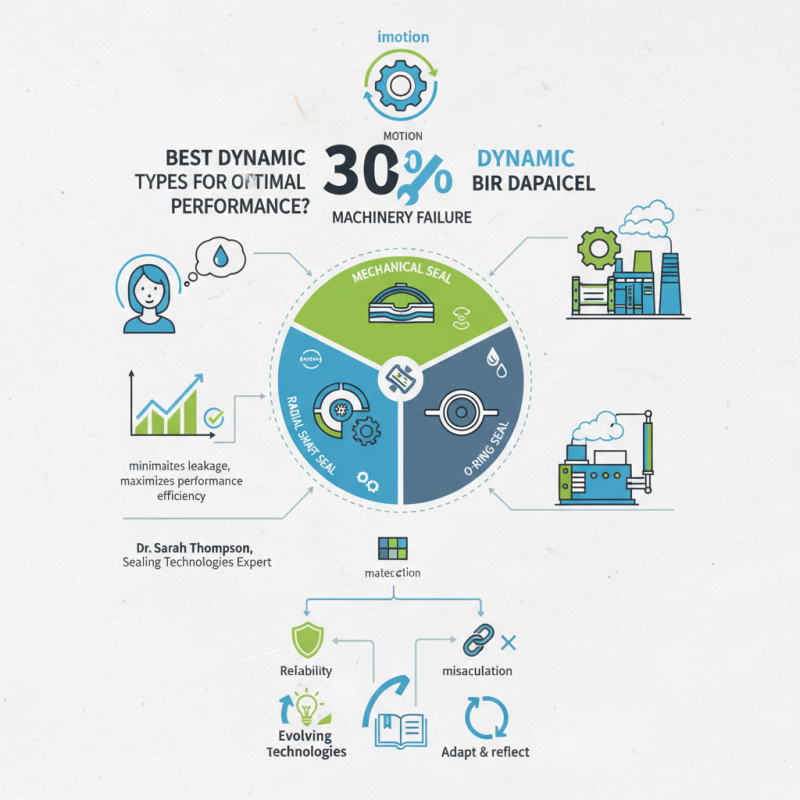
In industries that rely on motion, the choice of Dynamic Seal can significantly impact equipment longevity and performance. According to a report by the International Sealing Distribution Association, improper seals can lead to a staggering 30% of machinery failure. This highlights the critical role that Dynamic Seals play in maintaining efficiency across various applications.
Experts, such as Dr. Sarah Thompson, a leading authority in sealing technologies, assert, "The right Dynamic Seal minimizes leakage and maximizes performance efficiency." Her work demonstrates that selecting the appropriate seal type is vital for operational excellence. Different environments require different materials, yet not all solutions are straightforward. Reliability in high-stress applications is often contingent upon careful material selection.
It's essential to recognize that not all seals perform equally. This complexity can lead to miscalculations in seal selection. As the industry continues to evolve, understanding the nuances of Dynamic Seals will remain crucial. Companies must regularly reflect on their choices and adapt to new technologies or insights to enhance reliability and service life.
Types of Dynamic Seals and Their Applications
Dynamic seals play a critical role in various mechanical systems. Each type has unique characteristics, influencing their application. Common types include lip seals, mechanical face seals, and rotary seals.
Lip seals, designed for shafts, provide effective sealing against liquids. They are often used in automotive engines.
Mechanical face seals work well in high-pressure environments. These seals are prevalent in pumps and compressors.
Rotary seals are versatile and used in many applications, from hydraulic systems to industrial machinery. They accommodate shaft movement, which can be challenging.
Selecting the right seal type requires careful consideration of operating conditions. Temperature, pressure, and the media being sealed are all factors to analyze.
Many engineers often overlook the importance of seal material. This oversight can lead to premature failure. Understanding the environment helps in selecting the correct material.
Factors such as abrasion resistance and compatibility with the fluid should be prioritized. Miscalculations can compromise system integrity, highlighting the need for thorough analysis. Therefore, expertise in dynamic sealing is essential for optimal performance.
Factors Affecting the Performance of Dynamic Seals
Dynamic seals are crucial in various applications, ensuring fluid containment and minimizing leaks. Their performance is influenced by several factors, including temperature, pressure, and material selection. Temperature variations can cause seals to expand or contract, impacting their ability to maintain a tight seal. High temperatures may lead to faster wear, while cold conditions could make materials brittle.
Pressure levels also play a significant role. Increased pressure can result in higher stress on seals, which may lead to failure if they are not designed to handle such loads. Additionally, the compatibility of seal materials with the fluid they are in contact with is critical. If the materials deteriorate or swell from exposure to the fluid, seal integrity is compromised.
Another consideration is the seal’s design. Some designs may provide a better seal under specific conditions compared to others. Reflecting on these variables can guide the selection of the right seal type. However, even the best seals may not perform optimally in all scenarios. Understanding these dynamics is essential to optimizing performance for specific applications.
Best Dynamic Seal Types for Optimal Performance
Comparison of Common Dynamic Seal Materials
Dynamic seals play a crucial role in various mechanical systems. They prevent fluid leakage and maintain pressure. The effectiveness of a dynamic seal depends significantly on the material used. Common materials include nitrile rubber, fluorocarbon, and polyurethane. Each has unique properties that cater to specific applications.
Nitrile rubber offers good abrasion resistance and works well in hydraulic applications. However, it can degrade when exposed to certain oils and fuels. Fluorocarbon seals, known for their temperature resistance, perform well in harsh chemical environments. Yet, their higher cost can be a barrier for some projects. Polyurethane seals combine good elasticity with strong resistance to wear. They provide excellent performance but may not hold up against high temperatures.
Testing and selection processes often reveal unforeseen challenges. For example, environmental factors can impact seal life, requiring adjustments in material choice. Some industries might overlook the importance of compatibility with lubricants. This oversight can lead to premature seal failure. Understanding the specific needs of your application is essential in choosing the right dynamic seal material.
Maintenance and Troubleshooting for Dynamic Seals
Dynamic seals play a crucial role in various industries, ensuring proper sealing in moving parts. However, they require regular maintenance to function optimally. Studies indicate that improper installation is a leading cause of seal failure. Reports suggest that up to 30% of dynamic seal failures arise from installation errors. Regular checks can mitigate this risk significantly.
Troubleshooting dynamic seals involves identifying common issues such as wear, fluid compatibility, and misalignment. For example, environmental factors can degrade sealing materials. A survey showed that 45% of leak issues stem from using the wrong material for specific fluids. Inspecting seals for signs of wear or damage on a routine basis is essential. Additionally, employing proper tools during installation can enhance the lifespan of these seals.
Regular training for maintenance staff is also vital. Knowledge sharing can improve understanding of dynamic seal systems. When staff comprehend the nuances, they can better identify potential problems. Furthermore, documentation of previous seal performances can guide future maintenance efforts. Research emphasizes that a proactive approach to troubleshooting and maintenance can enhance performance and extend seal life.
Emerging Technologies in Dynamic Seal Design
Dynamic seals play a crucial role in various applications, ensuring efficiency and preventing leakage. Emerging technologies are revolutionizing seal design, enhancing materials and performance. Innovations such as advanced polymer composites and 3D printing are changing the landscape. These technologies allow for customization to specific environments, improving functionality.
Manufacturers are increasingly using computer simulations to predict seal behavior. This helps in identifying potential issues before implementation. Testing under extreme conditions is essential, revealing how seals perform when faced with temperature fluctuations and pressures. This insight is valuable for improving designs and ensuring reliability over time.
Tips for selecting the right dynamic seal include assessing the operating environment carefully. Consider factors such as temperature, pressure, and medium exposure. It's crucial to prototype and test seals before mass production. A proactive approach can prevent costly failures later on. Ensure that you remain informed about the latest advancements in materials and techniques for optimal seal performance.
FAQS
: Dynamic seals prevent fluid leakage and maintain pressure in mechanical systems.
Common materials include nitrile rubber, fluorocarbon, and polyurethane.
Nitrile rubber can degrade when exposed to certain oils and fuels.
Fluorocarbon seals offer excellent temperature resistance in harsh chemical environments.
Improper installation is a leading cause, accounting for about 30% of failures.
Regular checks can identify issues early and extend the lifespan of seals.
Key points include wear, fluid compatibility, and proper alignment.
Training improves understanding, helping staff identify potential problems more effectively.
Advanced polymer composites and 3D printing are enabling custom designs and better performance.
Prototyping and testing seals is crucial to avoid costly failures later.
Conclusion
Dynamic seals play a crucial role in various mechanical applications by preventing leakage between moving parts. The article discusses different types of dynamic seals, including lip seals, O-rings, and mechanical seals, highlighting their specific applications and effectiveness in various environments. Factors such as temperature, pressure, and fluid compatibility are explored for their impact on the performance of dynamic seals, ensuring optimal functionality and longevity.
Moreover, the article compares common materials used in the construction of dynamic seals, such as rubber, silicone, and PTFE, which each offer distinct advantages depending on the application's requirements. Proper maintenance and troubleshooting techniques are also vital for the reliability of these seals, allowing for early detection of wear and preventing costly downtime. Additionally, the article highlights emerging technologies in dynamic seal design that promise improved performance and efficiency, signifying a continuous evolution in sealing solutions.

 101 Rubber