10 Best Rubber Mats for Industrial and Commercial Use

Time:2026-09-27 Author:Oliver
0%

Industrial floors face more than foot traffic. They absorb dropped tools, rolling carts, spills, and long hours of standing. The right Rubber Mats can improve grip, reduce fatigue, and help protect concrete from daily wear. The wrong choice can curl at the edges, shift under equipment, or become difficult to clean. Small details matter.

For this guide, “Elena Brooks” is a fictional composite specialist, not a real or independently verified industry source. Her illustrative observation is: “A mat earns its place when its grip, thickness, and cleaning needs match the work happening on it.” Treat that line as editorial guidance, not a sourced quotation. In practice, buyers should compare material, surface texture, thickness, drainage, chemical exposure, and expected load. A ribbed mat may suit a dry assembly area; a perforated design may work better near washdown zones. Yet no pattern solves every problem.

The 10 options ahead cover common industrial and commercial needs, from anti-fatigue stations to heavy-duty floor protection. We’ll look at practical trade-offs, including traction, comfort, maintenance, and fit. Product claims should be checked against manufacturer specifications and real site conditions. A showroom sample can feel convincing. It may still behave differently beneath a loaded cart or beside a wet doorway. Use this list as a starting point, not a substitute for testing. Choosing Rubber Mats is rarely glamorous, and sometimes the best answer is less obvious than it first appears.
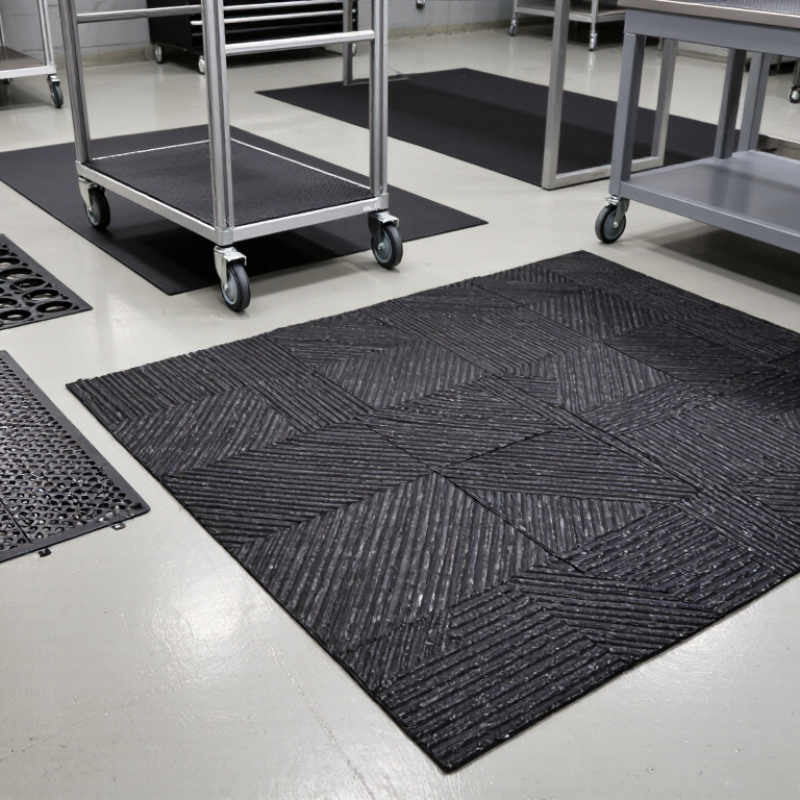
10 Best Rubber Mats for Industrial and Commercial Use

Industrial and Commercial Rubber Mats: Uses and Key Features

Industrial and commercial rubber mats serve different jobs, from reducing fatigue at workstations to improving footing in busy service areas. In assembly plants, textured anti-fatigue mats can cushion long standing shifts, while drainage holes help move water away from wet production zones. Small details matter. A beveled edge can lower trip risk, and a stable underside helps limit shifting under carts or repeated foot traffic. Thicker mats may suit stationary warehouse work cells, but they can obstruct pallet-jack routes if placed carelessly.

Commercial kitchens, entrances, and maintenance rooms need mats matched to their conditions. Grease-resistant or oil-resistant compounds may be appropriate, but rubber compatibility varies; check product specifications and cleaning guidance. Open-grid designs let liquids and debris pass below the surface, while solid mats are easier to wipe clean. Neither style fits every site. Inspect seams, edges, and worn textures regularly, especially where water, dust, or fine debris collects. A mat can improve comfort and traction, but it cannot correct poor drainage or replace safe work practices. Measure the area, identify likely exposure, and check thickness, hardness, and maintenance needs before installation.

Rubber Mat Materials, Surfaces, and Construction Types

Rubber mats differ in composition, surface, and construction. SBR blends suit general industrial floors, while nitrile rubber resists oils better around machine bays. EPDM handles weather exposure, but it may be a poor choice where oils are common. Natural rubber can offer grip and flexibility; chemical compatibility still needs checking. Small details matter. A diamond pattern grips underfoot, while raised ribs channel water and debris. Open-hole mats drain well, but wheels and narrow heels can catch in them. Solid mats are easier to sweep, though spills may remain on the surface.

Construction changes how a mat behaves over a shift. Molded rubber is often dense and durable; laminated or crumb-rubber products may vary in resilience and edge stability. Check thickness, underside grip, bevels, and seams against the actual floor and traffic. The U.S. Bureau of Labor Statistics recorded 2.6 million nonfatal workplace injury and illness cases in private industry in 2023. That figure is not a mat-performance measure, but it underlines why floor conditions deserve attention. Grand View Research estimated the global rubber flooring market at about US$1.2 billion in 2023, reflecting broad demand rather than proof that one construction suits every site. A mat can still shift when dusty. Test a sample under real footwear, loads, and cleaning routines before ordering.

Rubber Mat Materials: Typical Service Temperature Ranges

Temperature tolerance can help narrow material choices for industrial and commercial mats. These representative ranges vary with formulation, operating conditions, and manufacturer specifications; confirm the rating for the specific mat before use.

How to Choose a Mat for Different Workplace Conditions

Choosing a rubber mat starts with the job, not the catalog photo. In a wet wash area, look for a textured surface that offers grip and drains easily. Check that its material can tolerate the cleaners used on site. A mat that softens or swells may become a trip hazard. Small details matter.

For assembly benches, cushioning can reduce fatigue during long standing shifts. Match mat thickness to the work: a raised edge may catch a cart wheel, while a very soft surface can make turning less stable. Measure the space, including door swings and equipment paths. Then test a sample under real conditions, if possible. A quick trial can reveal what a specification sheet misses.

Heat, oils, and heavy loads call for different checks. Review the mat’s stated resistance and load guidance, and ask how often it needs inspection. In a loading bay, inspect seams and edges for curling after carts pass repeatedly. In a food-preparation area, consider cleaning access and drying time. No mat solves every problem. I have seen teams choose a thick mat for comfort, then regret how difficult it was to move for cleaning. Work conditions change, too, so reassess the choice when processes or equipment change.

10 Best Rubber Mats for Industrial and Commercial Use

Choosing among the 10 best rubber mats for industrial and commercial use starts with the task, not the thickness. A loading bay needs a different surface from a wet food-preparation area or a standing workstation. The U.S. Bureau of Labor Statistics reported 450,540 nonfatal cases involving days away, job transfer, or restriction from falls, slips, and trips in 2022. That figure makes traction and secure placement practical priorities, not cosmetic details. Look for drainage holes in washdown zones, beveled edges near carts, and oil-resistant rubber where spills are likely. Small details matter.

A useful shortlist includes:

  • solid anti-fatigue mats
  • drainage mats
  • grease-resistant mats
  • interlocking tiles
  • heavy-duty runner mats
  • ribbed mats
  • coin-pattern mats
  • entrance mats
  • insulating mats
  • custom-cut work-cell mats

Match the surface to the actual liquid, temperature, and traffic; “rubber” alone does not confirm chemical compatibility. That distinction matters.

Inspect edges and underside wear regularly, especially where forklifts turn or water collects. Even a well-chosen mat can curl, shift, or trap debris if maintenance slips. Test a sample under real workplace conditions before covering a whole aisle.

Installation, Cleaning, and Routine Maintenance

Before installation, clear away grit, oil, and moisture from the floor. Even small debris can create bumps beneath a mat. Let the mats reach room temperature, then lay them flat and check that edges meet without buckling. Follow the manufacturer’s guidance for expansion gaps and approved adhesives; conditions vary by material and site. Trim only with suitable tools, and keep cut edges away from busy walkways where possible. It is easy to rush this step. That is often where trouble starts.

For routine cleaning, sweep or vacuum loose particles before mopping. Use warm water and a mild, pH-neutral cleaner, then rinse away residue if needed. Strong solvents and oily products may damage rubber or leave a slippery film. Dry the surface before reopening the area. A damp mat is not a clean mat.

Set a simple inspection schedule. Look for curled corners, open seams, cracks, and worn areas, especially near equipment and entrances. Lift sections occasionally to check for trapped water or dirt underneath, and let both surfaces dry fully. Replace mats that no longer lie flat or provide reliable traction. In practice, cleaning schedules sometimes slip during busy shifts; record checks so small problems do not become trip hazards.

FAQS

How should I choose a mat for a wet work area?

Choose a textured surface with drainage holes for washdown areas. Check that the material tolerates the cleaners used on site. Water still needs somewhere to go.

What type of mat works well at a standing workstation?

An anti-fatigue mat can cushion long shifts at an assembly bench. Match its thickness to the task. A very soft surface may make turning less stable.

How can I prevent mat edges from catching carts?

Measure cart routes, door swings, and equipment paths before installation. Beveled edges can help near rolling loads. Check seams and corners for curling.

Are all rubber mats suitable for oil, heat, or chemicals?

No. Review stated resistance and load guidance for the actual workplace conditions. “Rubber” alone does not confirm compatibility. Test a sample if possible.

What should I consider for a food-preparation area?

Consider drainage, cleaning access, and drying time. Lift sections occasionally to check for trapped water or dirt. A damp mat is not clean.

How should I prepare the floor before installing mats?

Remove grit, oil, and moisture first. Let mats reach room temperature, then lay them flat and check for buckling. Rushing this part can cause problems.

How do I clean and maintain workplace mats?

Sweep or vacuum loose debris, then use warm water and a mild, pH-neutral cleaner. Rinse residue when needed and dry the surface before reopening the area. Strong solvents may damage rubber.

When should a mat be inspected or replaced?

Check for curled corners, open seams, cracks, and worn areas near entrances and equipment. Record routine checks, even during busy shifts. Schedules can slip.

Should I choose one mat type for the whole facility?

Usually not. Loading bays, wet areas, and standing workstations have different needs. Reassess mats when equipment or processes change. One choice rarely fits all.

Conclusion

Rubber Mats are a practical choice for industrial and commercial workplaces, where they can help improve traction, reduce fatigue, protect floors, and manage exposure to moisture, oils, or heavy foot traffic. Their performance depends on factors such as rubber composition, thickness, surface texture, drainage design, and construction. Understanding these features makes it easier to match a mat to its intended setting, whether it is used at a workstation, entrance, production area, or other high-traffic space.

Choosing among the best options involves considering workplace conditions, including the type of activity, expected load, slip risks, and cleaning requirements. The right mat should fit the space and offer suitable durability, comfort, and resistance to everyday wear. Proper installation helps keep mats stable and effective, while routine cleaning and inspection support safe use and extend their service life. Together, these considerations provide a straightforward framework for selecting and maintaining rubber mats for demanding environments.


Oliver

Oliver

Oliver is a seasoned marketing professional with a wealth of expertise in driving brand awareness and engagement. With a deep understanding of our company's product offerings, he consistently delivers high-quality content that enriches our professional blog. His insights not only shed light on......