Choosing the right Automotive Door Seal Adhesive is not a cosmetic decision. It affects cabin noise, water resistance, durability, and assembly efficiency. A poorly bonded seal may lift at the corner, especially after repeated door slams and temperature changes.
Grand View Research valued the global automotive adhesives market at approximately USD 5.4 billion in 2023. Its report also forecasts steady growth through 2030, driven by lightweight vehicle design and improved manufacturing processes. MarketsandMarkets similarly identifies structural bonding, weatherstrip installation, and noise reduction as important automotive adhesive applications. These figures show a growing market. They do not guarantee that every product suits every door seal.
Dr. Manfred Schmid, an automotive adhesive-technology specialist, states, “Adhesive performance begins with surface preparation, not the cartridge.” That principle remains practical. Technicians should inspect rubber compatibility, substrate type, curing speed, temperature resistance, and peel strength. A sealant that bonds well to painted steel may perform poorly on EPDM rubber or oily plastic. Small details matter. Clean surfaces matter more.
This guide explains how to compare Automotive Door Seal Adhesive products, including solvent-based, water-based, and pressure-sensitive options. It also considers application tools, storage conditions, production speed, and long-term exposure to sunlight and moisture. Some manufacturer data can look impressive. Real-world testing may still reveal weaknesses. That is why careful sampling, controlled trials, and documented inspection should support the final choice.
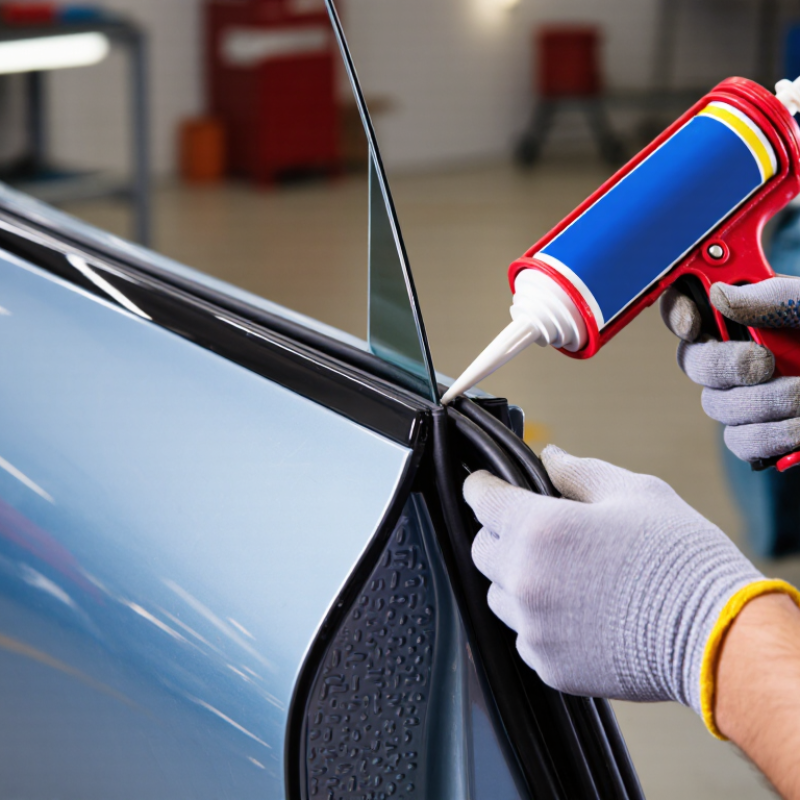
How to Choose the Best Automotive Door Seal Adhesive?
Understanding Automotive Door Seal Adhesive Requirements
A door seal adhesive must survive movement, moisture, heat, and winter cold. The joint also faces repeated compression whenever the door closes. Choose an adhesive that bonds with both the seal material and painted metal. EPDM and TPE surfaces can resist bonding. Their surface energy and additives matter.
Check the working temperature range before comparing strength figures. A strong adhesive may soften inside a hot vehicle. It may also crack after freezing. Look for resistance to water, salt spray, cleaning chemicals, and vibration. Peel strength matters because the seal edge can lift gradually. Shear strength matters along the roof rail and door frame. Cure speed affects production, but rushed curing can create weak contact.
Surface preparation is often the real deciding factor. Remove dust, wax, oil, and loose paint with a compatible cleaner. Allow the surface to dry fully. Apply even pressure across the seal. Small gaps are not harmless. They can collect water and start peeling. I have seen a good adhesive fail because the seal was stretched during installation. That mistake is easy to repeat. Test a small section first, then inspect adhesion after heat, cold, and water exposure. Review the technical data sheet, storage limits, and batch consistency. If the substrate changes, retest it; assumptions can be expensive.
Key technical requirements for selecting an adhesive used with automotive door weatherstrips and sealing systems
| Requirement | Typical Engineering Target or Range | Why It Matters for Door Seals | Recommended Evaluation Method | Selection Considerations |
|---|---|---|---|---|
| Substrate Compatibility | EPDM, TPE, PVC, coated steel, aluminum, and painted surfaces | The adhesive must form a stable bond to both the elastomeric seal and the vehicle body without damaging the substrate. | Conduct lap-shear, peel, and aging tests on the exact production substrates and coatings. | Confirm compatibility with rubber compounds, plasticizers, primers, paint systems, and corrosion-protection coatings. |
| Service Temperature Resistance | Approximately −40°C to 120°C; short-term exposure may reach 150°C depending on the system | Door seals experience winter cold, solar heating, engine-compartment-adjacent temperatures, and heat from vehicle finishing processes. | Test bonded assemblies after thermal cycling and extended exposure at the intended temperature limits. | Use the adhesive supplier’s validated continuous and peak temperature ratings rather than relying only on nominal specifications. |
| Moisture and Water Resistance | No significant loss of adhesion after water immersion, humidity exposure, or repeated wet-dry cycles | Door seals are exposed to rain, car washing, condensation, road splash, and trapped moisture. | Perform water immersion, high-humidity, and wet-dry cycling tests followed by peel and visual inspection. | Check resistance to hydrolysis, edge lifting, whitening, swelling, and corrosion under the bonded area. |
| UV and Weathering Resistance | Stable adhesion and limited cracking, chalking, or embrittlement during accelerated weathering | Exposed portions of the seal and adhesive can receive ultraviolet radiation and fluctuating outdoor temperatures. | Use accelerated UV and weathering exposure followed by adhesion and appearance assessment. | For visible or partially exposed bonds, select a system specifically qualified for exterior automotive use. |
| Peel and Shear Strength | Adequate strength for the seal geometry, with cohesive failure preferred over clean interfacial failure | Peel loads occur when doors open, close, or flex, while shear loads occur from seal compression and body movement. | Measure 180-degree peel and lap-shear performance before and after environmental aging. | There is no universal value for every design; the target should be based on seal profile, bond width, load, and safety margin. |
| Elasticity and Movement Capability | Sufficient elongation and flexibility to accommodate seal compression, vibration, and thermal expansion | Door seals continuously deform and move relative to the body. A rigid adhesive layer may crack or transfer excessive stress to the seal. | Use cyclic compression, flexing, vibration, and thermal-expansion tests on finished assemblies. | Choose a flexible adhesive when the joint experiences movement; avoid selecting solely on initial tensile strength. |
| Initial Tack and Green Strength | Enough immediate holding power to prevent seal movement before full cure or final bonding strength | Good early adhesion supports accurate positioning and reduces lifting, shifting, and rework during assembly. | Measure open time, fixture time, initial peel resistance, and movement under representative handling loads. | Balance tack with repositionability, since excessive immediate grab can make alignment difficult. |
| Cure or Drying Profile | Compatible with the available assembly window and production line temperature, humidity, and speed | The adhesive must reach handling strength and final performance within the manufacturing process. | Record open time, tack-free time, fixture time, and final cure under actual plant conditions. | Moisture-cure, heat-cure, pressure-sensitive, and solvent-based systems require different process controls and equipment. |
| Surface Preparation Tolerance | Reliable bonding after the specified cleaning and preparation process | Oil, dust, mold-release agents, silicone contamination, and processing residues can cause premature failure. | Compare prepared and deliberately contaminated panels using peel, shear, and aging tests. | Define an approved cleaning method and determine whether abrasion, primer, plasma, or corona treatment is required. |
| Chemical Resistance | Resistance to automotive fluids and cleaners expected during vehicle use and maintenance | Adhesive joints may contact detergents, windshield washer fluid, road salt, lubricants, fuel traces, and cleaning chemicals. | Expose bonded samples to relevant fluids at controlled temperatures, then evaluate adhesion, swelling, and softening. | Test the actual chemical concentration and exposure duration rather than using generic fluid-resistance claims. |
| Compression-Set and Seal Retention | The seal should remain correctly positioned and maintain designed compression after aging | Loss of position or excessive permanent deformation can create wind noise, water leakage, and door-closing problems. | Measure compression recovery, dimensional change, and leakage after thermal and mechanical aging. | Evaluate the complete seal-and-adhesive system, not the adhesive alone. |
| Noise, Vibration, and Harshness Performance | No squeak, rattle, flutter, or adhesive debonding under representative vehicle vibration | Improper bonding or excessive stiffness can transmit vibration and create unwanted noise around the door frame. | Perform vibration, road-load simulation, door-cycle, and acoustic evaluations on production-intent parts. | Consider adhesive damping, flexibility, bond-line thickness, and interaction with flocked or coated seal surfaces. |
| Bond-Line Thickness and Coverage | Uniform, continuous coverage within the adhesive system’s specified application range | Thin spots can cause premature failure, while excessive adhesive can interfere with seal compression, appearance, or door fit. | Inspect bead dimensions, coverage, squeeze-out, and bond-line uniformity using production-representative parts. | Specify bead size, application path, tolerances, and inspection criteria in the assembly process. |
| VOC, Odor, and Interior-Air Requirements | Compliant with applicable vehicle interior-air, emissions, and workplace requirements | Adhesive vapors and residual odor can affect worker safety, passenger comfort, and vehicle qualification. | Review safety documentation and perform emissions or odor testing where required by the vehicle program. | Water-based, hot-melt, reactive, and solvent-containing systems have different emission and ventilation needs. |
| Process and Application Method | Consistent dispensing by manual, pneumatic, robotic, spray, roll, or preformed-tape application | Application consistency directly affects bond width, cure, material usage, and production reliability. | Validate dispensing speed, bead control, equipment compatibility, and operator or robot repeatability. | Consider viscosity, pot life, nozzle size, storage conditions, packaging, and line takt time. |
| Durability and Failure Mode | Cohesive failure or substrate failure is generally preferable to clean adhesive separation | A durable joint should retain adhesion after combined thermal, moisture, chemical, and mechanical exposure. | Use accelerated aging followed by destructive testing and microscopic or visual failure-mode analysis. | Evaluate failure location, not only peak strength, because high initial strength does not guarantee long-term durability. |
| Engineering note: The ranges and targets shown are general automotive design references, not universal acceptance limits. Final requirements should be established through the vehicle program’s specifications, production process, substrate configuration, and validation testing. | ||||
It should resist rain, road salt, heat, vibration, and repeated door movement. Winter contraction matters too.
A rigid adhesive may crack when rubber bends or metal expands. Strong at first is not always strong later.
Look for temperature, aging duration, substrate type, elongation, peel strength, and failure mode. “Strong bond” alone is incomplete.
Remove dust, wax, silicone residue, and paint flakes. Clean both surfaces with a compatible solvent, then let them dry completely.
Use a thin, continuous, even bead. Too little may leave gaps, while excess adhesive can create uneven pressure.
Work between 15°C and 30°C when possible. Follow the stated open time and full cure time.
Press it firmly around corners and drain areas. Use masking tape, but avoid early compression that creates gaps.
Test a hidden section first. After curing, inspect for swelling, softening, discoloration, or poor adhesion.
Read the Safety Data Sheet. Check ventilation, solvents, sensitizers, protective equipment, and flash-off requirements.
Compare results after heat, humidity, salt, and freezing exposure. Record the batch, temperature, cure time, and test result. A clean bond can still fail early.
Choosing the right Automotive Door Seal Adhesive is essential for creating a durable, weather-resistant bond between the door seal and vehicle frame. Start by identifying the seal material, such as rubber, EPDM, silicone, or foam, because different materials may require specific adhesive formulations. Consider the vehicle’s operating conditions, including exposure to rain, sunlight, temperature changes, vibration, and repeated door movement. A suitable adhesive should provide strong initial grip, remain flexible after curing, and resist moisture, chemicals, and aging without becoming brittle.
Proper surface preparation is equally important. Clean and dry both surfaces, remove grease or old residue, and lightly abrade smooth areas when appropriate. Apply an even, controlled layer of adhesive and follow the recommended curing time before closing or operating the door. Before use, check compatibility, safety instructions, ventilation requirements, and long-term performance expectations. Testing the adhesive on a small, hidden area can help confirm adhesion and prevent damage to the seal or vehicle finish.

 101 Rubber