Choosing the right Rubber Caps for your specific needs can be a daunting task. With numerous options available, understanding their purpose is critical. Rubber Caps serve various functions, from protecting sensitive equipment to ensuring safety in industrial applications. Selecting the optimal type requires careful consideration of several factors.
Different environments demand different qualities in Rubber Caps. Some need heat resistance, while others require waterproof properties. For example, a laboratory might benefit from caps that endure chemicals, whereas outdoor applications prioritize UV resistance. Additionally, the size and shape are vital. A poor fit can render even high-quality caps ineffective.
Don’t overlook the material. While many assume all Rubber Caps are the same, variations exist. Some may stretch too easily or degrade when exposed to the elements. Real-world feedback reveals that users often face challenges, such as premature wear or incompatibility with specific products. Reflecting on these experiences can guide you to a better choice.
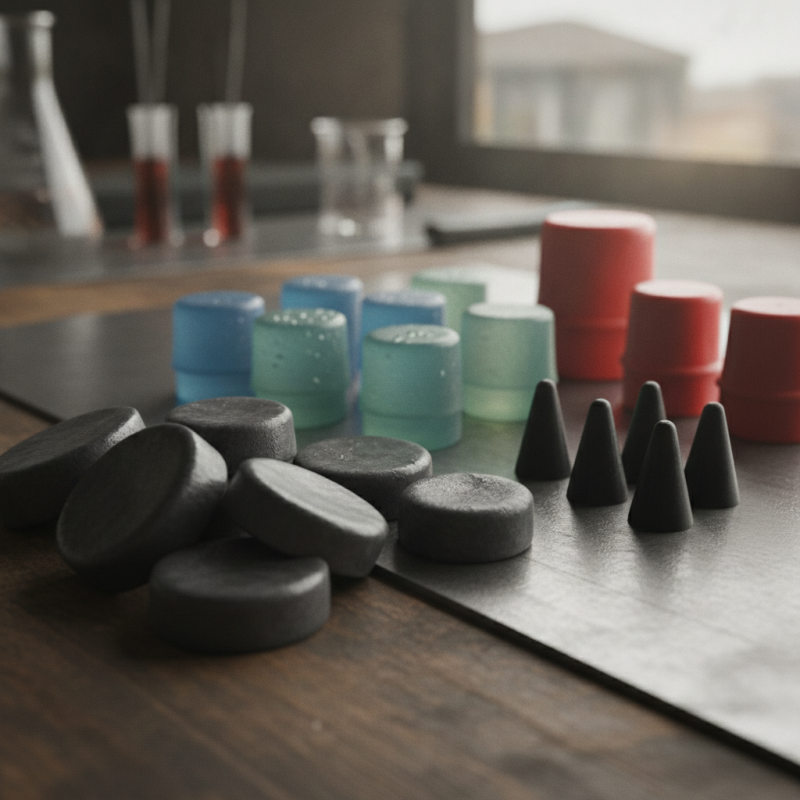
When selecting rubber caps, it's crucial to understand the various types available. There are standard rubber caps, which are commonly used for protection against dust and moisture. These caps can fit a variety of applications, from electrical components to household items. They come in different sizes and thicknesses, catering to diverse needs.
Another type worth mentioning is silicone caps. These are often preferred for their durability and flexibility. Silicone can withstand extreme temperatures, making it ideal for applications involving heat or cold. However, they may not seal as tightly as standard rubber options, which can lead to issues in certain situations.
There are also specialty caps designed for specific uses. For example, some rubber caps are chemically resistant. This is particularly important in laboratory or industrial settings. Choosing the right type can significantly affect both functionality and safety. It's important to consider the environment in which these caps will be used and the potential challenges they may face. Sometimes, experimenting with different options can reveal unexpected results.
When selecting rubber caps, consider the specific application. Different materials offer various benefits. For instance, some caps are better for
temperature resistance. Others may provide excellent chemical compatibility. Understanding your needs is crucial.
Durability is another factor to reflect on. Thickness and material type influence a cap's lifespan. Thicker caps may last longer but can be more rigid. Softer options might offer a snug fit but may wear out quickly.
Evaluating your usage environment is essential.
Think about the sealing properties too. If air or liquid exposure is a concern, choose caps designed for
airtight or watertight seals. Sometimes, a standard cap might not meet expectations.
Testing a few options could help identify the best fit. Remember, not everything will suit your unique requirements.
Choosing the right rubber caps involves careful consideration of size and dimensions. A perfect fit is essential for functionality. When assessing size, measure the diameter of the item you plan to cover. This step is critical; an oversized cap may slip off, while one that is too small might not fit at all. Use a caliper for precise measurements.
Consider the thickness of the cap as well. A thicker cap provides better protection but may be less flexible. Ensure that the cap can withstand your specific application. Some situations call for high-temperature resistance or chemical durability. Reflecting on past experiences can guide your choices. Did a previous cap fail due to improper sizing? Such reflections matter.
Don’t overlook the length of the cap either. A longer cap may protect more area but could impact usability. Check how the cap interacts with your product. Try a few options to see which fits best in practice. The importance of fitting well goes beyond mere aesthetics; it affects safety and efficiency too.
When selecting rubber caps, the choice of material is crucial. Various rubber compounds exhibit distinct properties that cater to diverse needs. According to the Rubber Manufacturers Association (RMA), natural rubber offers excellent elasticity and tensile strength. In contrast, synthetic rubbers, such as silicone, provide greater temperature resistance and durability. For environments with extreme temperatures, silicone is often the preferred option.
Furthermore, the hardness of the rubber, measured by the Shore durometer scale, significantly influences performance. Softer rubbers (30-50 Shore A) are more compressible and thus suitable for applications requiring tight seals. Meanwhile, harder rubbers (60-90 Shore A) endure higher pressures and mechanical stresses. A report from the International Rubber Study Group highlights that proper hardness selection can enhance the lifespan of rubber components by up to 40%.
The presence of additives and fillers also affects the overall quality. For instance, carbon black enhances UV resistance and improves strength. However, excessive fillers may compromise elasticity. Balancing these elements can be challenging, requiring careful consideration of your application’s specific demands. Each choice carries its own risks and rewards, making it essential to assess the intended use thoroughly.
When selecting rubber caps, the balance between cost and quality weighs heavily on your decision. Research from the Rubber Manufacturers Association indicates that the quality of materials directly affects durability. Inexpensive options often use lower-grade rubber, which may wear out faster. A well-made rubber cap can last up to five years when used appropriately, while cheaper versions may fail within months.
Investing in higher-quality rubber caps can save money in the long run. According to industry reports, premium caps might be up to 30% more expensive. However, they typically offer better resistance to temperature changes and environmental factors. A recent survey revealed that 72% of users preferred durability over initial cost. This trend suggests that quality is a significant consideration for many.
Still, not every high-priced rubber cap guarantees exceptional performance. Users should consider specific needs, such as size and application. It's also wise to check reviews and seek expert opinions before making a decision. Understanding these factors will enable more informed choices, balancing cost against the quality effectively.
| Type of Rubber Cap | Material | Cost per Unit ($) | Durability (Years) | Temperature Resistance (°C) | Best Use Cases |
|---|---|---|---|---|---|
| Standard Rubber Cap | Natural Rubber | 0.50 | 5 | -20 to 80 | General Use |
| Silicone Rubber Cap | Silicone | 1.00 | 10 | -50 to 200 | Food Safety, Electronics |
| Neoprene Rubber Cap | Neoprene | 0.75 | 7 | -30 to 100 | Automotive, Industrial |
| EPDM Rubber Cap | EPDM | 0.85 | 12 | -50 to 150 | Outdoor, Weather Resistant |
| Fluoroelastomer Cap | FKM | 2.50 | 15 | -20 to 200 | Oil, Chemical Resistance |
: The common types include standard rubber caps and silicone caps. They offer different benefits for various applications.
Silicone caps are durable and flexible. They also withstand extreme temperatures, but may not seal as tightly as standard rubber caps.
Specialty caps are designed for specific uses, like chemical resistance in labs. Choosing the right type affects functionality and safety.
The hardness, measured on the Shore durometer scale, influences performance. Softer rubbers offer tight seals, harder rubbers endure more pressure.
Additives can enhance properties like UV resistance. However, too many fillers can reduce elasticity, impacting overall quality.
Understanding material properties is crucial. Natural rubber offers elasticity, while synthetic options offer temperature resistance.
Yes, experimenting with various caps can lead to surprising outcomes that could either solve or create issues in specific applications.
The working environment influences which rubber cap to use. Consider temperature extremes and potential chemical exposure for safety.
Many overlook the importance of matching the rubber type to specific application needs, which can lead to inefficiency or failure.
Wrong hardness or unsuitable material can decrease rubber longevity. A poor choice may reduce lifespan by up to 40%.
Choosing the right Rubber Caps for your specific needs involves understanding the various types available and considering specific application requirements. Key factors include evaluating size and dimensions to ensure optimal fit and functionality, as well as assessing material properties to select the best rubber type for the intended use.
Additionally, weighing the balance between cost and quality is crucial in finding the best value in Rubber Caps. By carefully analyzing these factors, you can make an informed decision that meets both your functional requirements and budget constraints, ensuring effective and reliable performance across diverse applications.
101 Rubber