Choosing a Rubber O-Ring can look simple: match a diameter, fit it into a groove, and tighten the assembly. In practice, a seal that works on a clean bench may leak after exposure to heat, pressure, motion, or an incompatible fluid. Material, hardness, dimensions, groove design, and installation all matter. Small details matter.
Parker Hannifin’s O-Ring Handbook (ORD 5700) explains how compound selection, compression, and operating conditions affect seal performance. NASA’s Rogers Commission report on the Space Shuttle Challenger accident also documents how O-ring behavior changed in cold conditions. These sources offer a practical lesson: operating conditions must guide selection, not guesswork. For historical context, NASA engineer Roger Boisjoly raised concerns about cold-weather O-ring performance before the launch; his documented warnings show why test evidence and clear engineering communication matter. This is a paraphrase of the record, not a direct quotation.
The tips ahead turn those principles into checks you can apply before ordering or installation. Identify the fluid and temperature range. Confirm pressure, motion, and groove dimensions. Then verify that the chosen compound suits the application. A slightly undersized ring or a rushed installation can create a leak that is difficult to trace. Even experienced teams can miss a detail. That is worth admitting.
Use the guide as a starting point, not a substitute for current manufacturer data or application-specific testing. A reliable Rubber O-Ring choice depends on the full service environment—and on checking assumptions before the seal goes into service.
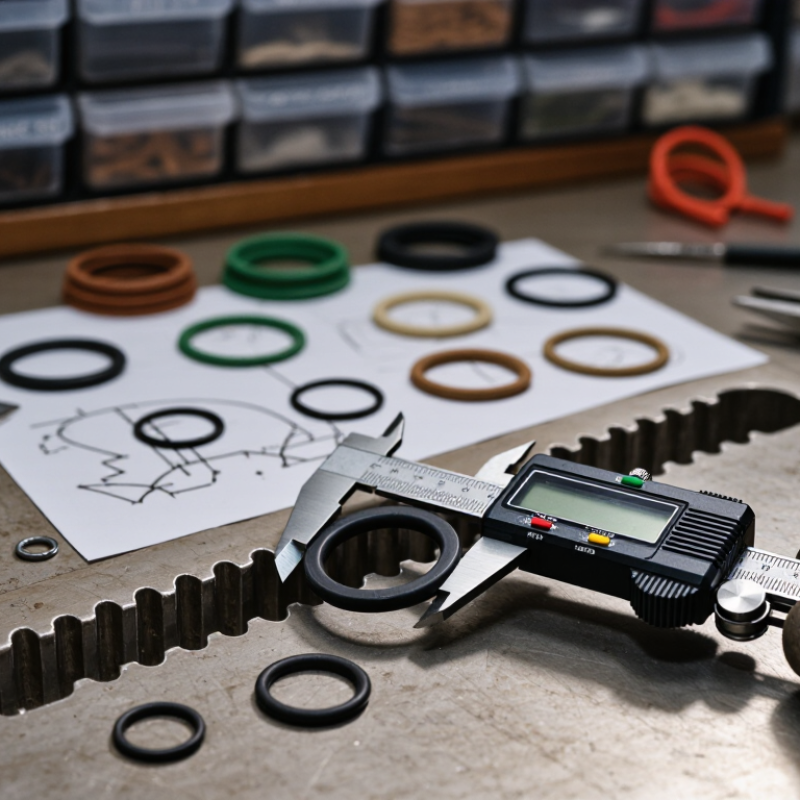
Selecting an O-ring begins with the fluid it must seal against, not just its size. Nitrile rubber often works well with mineral oils and fuels, while EPDM is commonly chosen for water, steam, and many cleaning solutions. But EPDM generally performs poorly with petroleum oils. Fluoroelastomers resist many oils and fuels, yet some ketones and amines can damage them. Silicone handles wide temperature swings, though abrasion may shorten its service life. No material fits every job.
Tip: List the chemical, concentration, temperature, and contact time. Check the manufacturer’s compatibility data, then confirm it against the actual operating conditions. A quick wipe test is not enough. If the fluid blend is uncertain, ask for a sample test or consult a materials specialist before ordering.
Chemical compatibility can shift with heat, pressure, and repeated exposure. An O-ring that looks unchanged may still have softened, swollen, or lost sealing force. Inspect for cracks, tackiness, and dimensional changes after testing. I would not treat a chart as a guarantee; it narrows the options, but real service conditions can be messy. Include cleaning agents and occasional spills in your assessment, too.
A reliable O-ring fit starts with the groove, not the old seal. Used rings can flatten, swell, or stretch during removal. Measure them, but treat those readings as clues. Confirm the inside diameter, cross-section, and groove dimensions against a technical drawing or trusted specification. A caliper can help, though soft elastomer compresses under its jaws. Measure lightly. Repeat at several points, and record whether dimensions are in millimeters or inches.
The cross-section determines how much the seal compresses. Too little squeeze may allow leakage; too much can cause wear, difficult assembly, or extrusion into a clearance gap. Check groove depth and width, plus the shaft or bore diameter. Also consider surface finish and clearance. A ring that looks right on a bench may twist during installation. Check that any lubricant suits both the seal material and the fluid. Temperature, pressure, and fluid exposure can change dimensions over time. A near-match may seem convincing, yet a small cross-section difference can affect sealing. Verify tolerances and measurement conditions before choosing, especially for dynamic applications.
Hardness is a trade-off, not a pressure rating. Many industrial O-rings use elastomers around 70 Shore A; softer compounds can conform well to small surface flaws, while harder compounds generally resist extrusion better. ASTM D2240 measures durometer hardness on a 0–100 scale, but that number alone cannot predict seal performance. ISO 3601-5 addresses material requirements for O-rings, and ISO 48-4 describes rubber-hardness measurement. Check the actual compound data sheet, too. A number without test conditions can mislead.
For a slow-moving piston with moderate pressure, 70 Shore A may offer a practical starting point. At higher pressure or with a wider extrusion gap, consider a harder compound, often near 90 Shore A, and assess whether backup rings are needed. Movement changes the decision: harder seals can increase friction and wear, while softer seals may deform or extrude. Small details matter. Measure the gland, inspect the shaft finish, and consider temperature and lubrication before choosing. Hardness guidance is imperfect; real assemblies may behave differently from clean laboratory samples. Test the seal under representative pressure, speed, and temperature, then inspect for flattened edges, scoring, or leakage.
10 Tips for Choosing the Right Rubber O-Ring
Check the actual temperature, not only the equipment’s average temperature. Short heat spikes can harden or soften rubber quickly. Confirm the material’s continuous and intermittent temperature limits. Check pressure during startup, shutdown, and pressure surges. Pressure alone is not enough. Clearance, hardness, squeeze, and extrusion risk also matter. For high-pressure service, consider a backup ring and verify the gland design against ISO 3601 dimensions.
Check the fluid, gas, and cleaning chemicals in contact with the seal. ASTM D471 evaluates volume, mass, and hardness changes after fluid exposure. These results reveal compatibility problems. Check shaft speed and movement. A static seal may fail in a reciprocating application. Check compression set data from ASTM D395 testing. Lower compression set usually supports longer sealing performance, but test conditions must match real service. I have seen a seal pass a workshop test and fail after repeated thermal cycling.
Check installation space, surface finish, and edge condition. Sharp corners can cut the O-ring during assembly. Lubrication may reduce twisting, but it must be compatible with the rubber and process fluid. Check storage age and light exposure. ISO 3601 includes quality and dimensional requirements, yet standards cannot replace application testing. A rough calculation can mislead. Record real pressure, temperature, cycling frequency, and leakage observations before final selection.
Compare approximate service-temperature ranges for common elastomers. Actual limits depend on compound, fluid, pressure, and operating conditions.
Selection tip: Confirm the exact compound’s datasheet and check chemical compatibility, pressure, movement, and extrusion gap. For high pressure, an appropriate backup ring may be needed.
10 Tips for Choosing the Right Rubber O-Ring?
Tip 1: Compare material quality, not just price. Check the compound’s stated resistance to heat, oils, water, and the chemicals in your application. A low-cost ring may look identical but harden or swell sooner. Ask for batch-specific inspection records and storage guidance.
Tip 2: Verify dimensions and standards. Confirm the required inside diameter, cross-section, and tolerance against the drawing or equipment manual. Standards can help establish consistent sizing and testing, but requirements vary by application. Do not assume a familiar standard covers every operating condition. Measure a sample when possible; I have seen small sizing differences complicate installation.
Tip 3: Assess supplier reliability through evidence. Ask how the supplier handles traceability, material changes, defects, and delivery delays. Request technical data sheets and clear answers about production controls. A dependable supplier should explain limitations, not promise that one compound suits everything. Check whether sample parts match later batches. Keep a record of approvals and test results, even when the order seems routine.
Tip 4: Review service conditions before choosing. Pressure, temperature cycling, compression, and exposure time all affect performance. Share these details with a qualified supplier or engineer. The first choice may be wrong. Test the O-ring in representative conditions before committing to a large order.
| # | Selection tip | What to compare | Practical check | Useful evidence or standard |
|---|---|---|---|---|
| 1 | Define the operating conditions | Media, minimum and maximum temperature, pressure, motion, and exposure time. | Share the full operating range—not just the normal running temperature—with the seal designer. | Request compound compatibility and application data for the actual fluid and conditions. |
| 2 | Match the elastomer to the fluid | Resistance to swelling, shrinkage, softening, hardening, and chemical attack. | Check compatibility against every fluid the O-ring may contact, including cleaning chemicals. | Ask for compound-specific test results; compatibility can vary by formulation, concentration, and temperature. |
| 3 | Check temperature limits in context | Continuous and intermittent temperature capability, plus changes in elasticity over time. | Confirm limits for the selected compound and fluid; a generic material-family range is not a design guarantee. | Review technical data and test conditions, including exposure duration and whether the value is continuous or intermittent. |
| 4 | Verify size and dimensional system | Inside diameter, cross-section, tolerances, and whether dimensions are metric or inch-based. | Specify the drawing or exact size designation; do not assume similar metric and inch sizes are interchangeable. | ISO 3601-1 covers O-ring dimensions and tolerances; AS568 defines a commonly used inch-size series. |
| 5 | Review gland and installation design | Groove dimensions, squeeze, clearance, surface finish, and risk of twisting or extrusion. | Check the complete seal assembly, not only the O-ring dimensions; assembly damage can cause early leakage. | Use application-appropriate gland guidance; ISO 3601-2 addresses housing dimensions for general applications. |
| 6 | Specify quality acceptance criteria | Permitted surface imperfections, inspection method, and acceptance level. | Agree on inspection requirements before ordering, especially for critical sealing applications. | ISO 3601-3 provides quality acceptance criteria for O-rings; specify the required class or criteria in the purchase documents. |
| 7 | Compare compound properties, not just hardness | Hardness, tensile properties, elongation, compression set, and batch consistency. | Treat hardness as one specification among several; it does not by itself establish sealing performance or chemical compatibility. | ASTM D2000 classifies rubber materials by selected requirements; confirm the full callout and test conditions. |
| 8 | Confirm regulatory and potable-water needs | Intended use, contact conditions, applicable jurisdiction, and required certification or conformity evidence. | Verify that documentation applies to the exact compound and end use; food-contact or drinking-water requirements are not interchangeable. | For example, 21 CFR 177.2600 covers certain rubber articles intended for repeated-use food contact; check applicable provisions and conditions. |
| 9 | Assess supplier traceability and quality controls | Lot identification, material records, inspection capability, and change-control process. | Ask how nonconforming product is handled and whether material or process changes are communicated. | Request a sample certificate of conformity, lot-traceability example, and relevant quality-system documentation. |
| 10 | Evaluate delivery, support, and verification | Lead time, stock policy, technical response, sample availability, and replacement support. | Compare quoted delivery commitments and support processes; validate critical parts with application testing before full release. | Use documented specifications, approved samples, and incoming inspection criteria to reduce supply and fit risks. |
Note: Standards and material data support selection but do not replace application-specific engineering review and testing.
Nitrile often suits mineral oils and fuels. EPDM commonly handles water, steam, and many cleaning solutions, but performs poorly with petroleum oils.
No material fits all. Fluoroelastomers resist many oils and fuels, but some ketones and amines can damage them.
List the chemical, concentration, temperature, and contact time. Include cleaning agents and occasional spills, too.
Charts are not guarantees. Check the actual operating conditions, then test a sample when the fluid blend is uncertain.
It measures rubber hardness on a 0–100 scale, but cannot predict seal performance alone. Check the compound data sheet and test conditions.
Near 90 Shore A may be worth considering with high pressure or a wider extrusion gap. Assess backup rings, friction, and wear as well.
Look for cracks, tackiness, swelling, flattened edges, scoring, or leakage. A ring can lose sealing force while looking unchanged.
Confirm inside diameter, cross-section, and tolerance against the drawing or equipment manual. Request batch inspection records and check whether sample parts match later batches.
Choosing the right Rubber O-Ring starts with understanding the fluids, gases, or chemicals it will contact, since different materials offer different levels of resistance. Accurate sizing is just as important: check the groove dimensions, inner diameter, and cross-section to help create a dependable seal without excessive stretching or compression. The O-ring’s hardness should also suit the application, balancing resistance to pressure and wear with the flexibility needed for movement.
Before making a selection, consider the full operating environment, including temperature ranges, pressure levels, and whether the seal will be static or dynamic. Compare product quality and relevant industry standards, and look for suppliers that can provide clear material and sizing information. Evaluating these factors together can help reduce leakage, premature wear, and unnecessary replacement while ensuring the seal is appropriate for its intended use.

101 Rubber