China’s rubber industry has become a major source of durable flooring products for factories, gyms, workshops, schools, and transport facilities. This guide examines China’s Top 10 Rubber Floor Matting Manufacturers through practical criteria, not advertising claims. Production capacity matters, but it is only one part of the decision.
We will consider rubber compound quality, surface texture, thickness accuracy, drainage design, odor control, and resistance to oils or heavy foot traffic. A useful mat should stay stable under pressure. It should also be easy to clean after muddy boots cross its surface. Small details often reveal manufacturing discipline.
John S. Dick, author of Rubber Technology: Compounding and Testing for Performance, described rubber technology as “both an art and a science.” That observation remains relevant. A manufacturer may own modern machinery, yet still produce inconsistent edges or weak bonding. Another supplier may offer fewer designs but stronger technical support.
This comparison will review factory experience, export capability, testing practices, customization options, certifications, and customer service. Samples should be checked before large orders. Photos are not enough.
The list is not perfect. Rankings can change with project requirements, market conditions, and updated factory data. Some manufacturers disclose more information than others, which can influence their position. Buyers should verify test reports, material specifications, warranty terms, and production samples independently.
Our aim is simple: to help readers identify reliable Chinese suppliers and select Rubber Floor Matting that fits real working conditions. Cost matters. Long-term performance matters more.
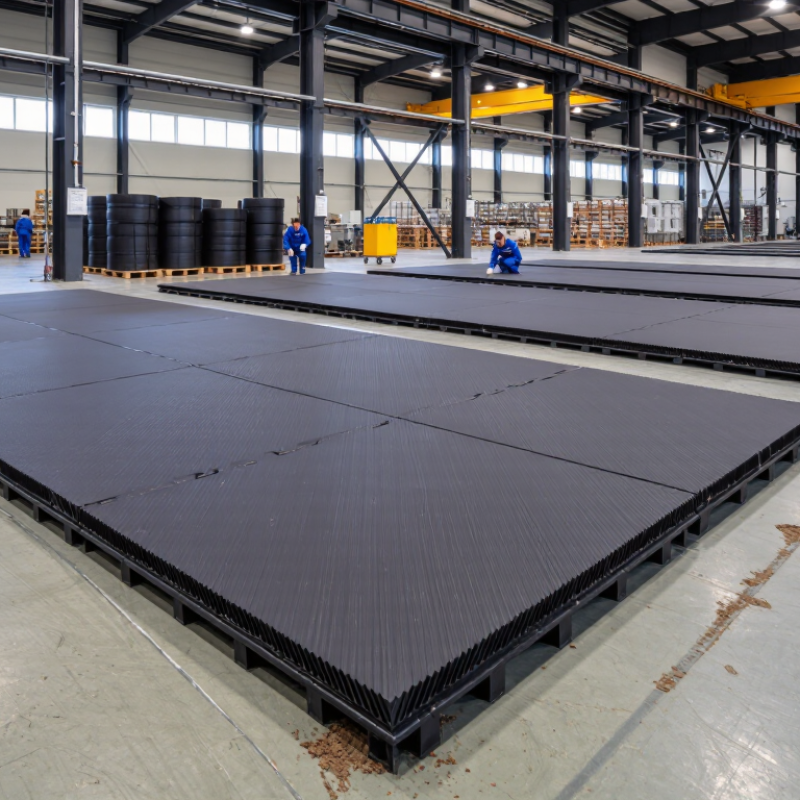
Rubber floor matting serves different needs across commercial, industrial, fitness, and public spaces. The main types include rolled sheets, interlocking tiles, entrance mats, drainage mats, and textured anti-fatigue surfaces.
Rolled rubber creates fewer seams in gyms and corridors. Interlocking tiles simplify replacement in weight rooms and workshops. Drainage mats suit wet entrances, kitchens, and locker areas.
Not every mat works.
Performance depends on material and surface design. Natural rubber offers flexibility and resilience, while synthetic rubber can improve resistance to oils, weather, and heavy traffic. EPDM blends are often selected for outdoor areas because they tolerate sunlight better.
Ribbed patterns scrape dirt from shoes, while coin textures improve grip under moderate moisture. The wrong pattern may trap debris and complicate cleaning.
That detail is easy to miss.
Industry data supports continued demand for these applications. Grand View Research reported that the global rubber flooring market was valued at approximately USD 1.9 billion in 2023, with projected growth through 2030. MarketsandMarkets also identifies gyms, healthcare facilities, and industrial workplaces as important application segments.
Buyers should check slip resistance, thickness, odor, fire performance, and installation conditions. A thick mat is not automatically safer. Site inspection remains essential, especially where forklifts, standing work, or water exposure are expected. Some specifications look impressive on paper but perform poorly after careless fitting.
China Top 10 Rubber Floor Matting Manufacturers?
When evaluating Chinese rubber mat manufacturers, start with material transparency. Ask for the rubber type, recycled content, hardness range, and production tolerance. A reliable supplier should provide test reports for slip resistance, abrasion, odor, and tensile strength. Check whether these tests match your intended use, such as gyms, workshops, or wet entrances. A sample should lie flat after shipment. It should also resist curling at the edges.
Production experience matters more than polished photographs. Request factory videos, process records, and recent inspection data. Examine mixing, molding, trimming, and packing procedures. Small details reveal discipline. For example, inconsistent surface texture may indicate unstable pressure or temperature control. Ask how rejected pieces are identified and recorded. I once trusted a neat sample too quickly. Later, batch variation became the real problem.
Reliability also depends on communication and traceability. The manufacturer should confirm dimensions, color limits, packaging, lead time, and replacement terms in writing. Review export documents carefully, including material declarations and safety testing. Independent inspections can verify thickness and weight before shipment. Do not judge capacity by equipment count alone. Check actual monthly output and maintenance records. A supplier may promise customization, yet lack suitable molds or testing support. That gap deserves attention. Price is useful, but it should never replace evidence.
This weighted evaluation model focuses on verifiable procurement factors rather than company or brand rankings. Compliance should be checked against applicable requirements such as ISO 9001 quality management, REACH and RoHS restrictions, and relevant ASTM or EN test methods. The percentages represent suggested priorities for comparing rubber floor mat suppliers.
China’s Top 10 Rubber Floor Matting Manufacturers are often compared by material quality, production experience, testing records, and export reliability. The strongest manufacturers usually offer EPDM, NBR, or recycled rubber options for gyms, workshops, entrances, and industrial areas. Their product ranges may include rolls, interlocking tiles, drainage mats, and custom-cut sheets.
A practical review should examine rubber density, odor control, slip resistance, and dimensional stability. Ask for thickness samples, abrasion data, and batch inspection reports. A 10-millimeter mat can feel firm, but its performance depends on density and backing design. Factory experience matters. Manufacturers with modern mixing lines can maintain more consistent color and hardness. However, printed specifications do not always reflect real installation results.
Check how each supplier handles mold design, packaging, replacement claims, and delivery delays. A reliable manufacturer should explain testing methods clearly and provide traceable production documents. Visiting the facility is useful, although it cannot replace independent sample testing. I would also place mats in a humid corner before approval. Small defects often appear there. No factory is perfect. Some suppliers may offer attractive prices but weak edge finishing or uneven thickness. Others may provide excellent quality with limited customization. This trade-off deserves careful attention. A balanced comparison should consider total service value, not only the quotation.
Anonymous industry benchmark based on commonly published product specifications and manufacturing capabilities
| Rank | Anonymous Manufacturer | Primary Rubber Materials | Main Product Types | Typical Thickness | Surface Options | Common Applications | Common Compliance References | Typical Export Regions |
|---|---|---|---|---|---|---|---|---|
| 1 | Manufacturer Profile 01 | SBR, recycled rubber | Roll matting, entrance mats, anti-fatigue mats | 3–20 mm | Plain, ribbed, coin, diamond | Factories, workshops, corridors, entrances | ISO 9001; REACH; RoHS, where applicable | Europe, North America, Southeast Asia |
| 2 | Manufacturer Profile 02 | EPDM, SBR blends | Outdoor mats, drainage mats, interlocking tiles | 8–25 mm | Perforated, studded, drainage-grid | Swimming pools, gyms, balconies, wet areas | Slip-resistance testing; REACH; ISO 9001 | Australia, Europe, Middle East |
| 3 | Manufacturer Profile 03 | Natural rubber, SBR | Heavy-duty rolls, industrial floor sheets | 4–15 mm | Fine ribbed, broad ribbed, textured | Loading bays, warehouses, production areas | ISO 9001; product-specific fire and slip tests | North America, Europe, East Asia |
| 4 | Manufacturer Profile 04 | Recycled SBR granules, EPDM granules | Gym tiles, impact-absorbing mats, puzzle tiles | 10–40 mm | Granule-textured, smooth, beveled edges | Fitness centers, weight rooms, playgrounds | EN 1177 for relevant impact products; REACH | Europe, North America, Asia-Pacific |
| 5 | Manufacturer Profile 05 | NBR, SBR blends | Oil-resistant mats, workshop mats, machine-area mats | 3–12 mm | Diamond, checker, fine ribbed | Automotive workshops, factories, maintenance rooms | Chemical-resistance testing; ISO 9001 | Europe, North America, South America |
| 6 | Manufacturer Profile 06 | SBR, natural rubber | Anti-slip rolls, stair treads, walkway mats | 2–10 mm | Raised rib, herringbone, abrasive texture | Stairs, ramps, walkways, public facilities | Slip-resistance testing; REACH; RoHS, where applicable | Europe, Middle East, Southeast Asia |
| 7 | Manufacturer Profile 07 | EPDM, recycled rubber | Colored tiles, decorative mats, outdoor flooring | 8–30 mm | Colored granule, smooth, patterned | Schools, leisure areas, playground surroundings | EN 1177 for relevant applications; REACH | Europe, Australia, North America |
| 8 | Manufacturer Profile 08 | SBR, synthetic rubber compounds | Commercial entrance mats, logo-ready matting, rolls | 5–18 mm | Waffle, ribbed, carpet-insert, scraper texture | Retail stores, offices, hotels, public entrances | Slip-resistance testing; ISO 9001; REACH | Europe, North America, Middle East |
| 9 | Manufacturer Profile 09 | Natural rubber, SBR, PVC-rubber blends | Kitchen mats, anti-fatigue mats, comfort flooring | 9–20 mm | Perforated, cushion-top, drainage surface | Commercial kitchens, bars, service counters | Slip-resistance and drainage tests; REACH | North America, Europe, Asia-Pacific |
| 10 | Manufacturer Profile 10 | Recycled SBR, EPDM, natural rubber | Custom-cut mats, modular tiles, protective floor sheets | 5–35 mm | Smooth, textured, perforated, custom patterns | Industrial, commercial, sports and logistics facilities | ISO 9001; REACH; product-specific performance tests | Global distribution markets |
Note: Product ranges, certifications, materials and export coverage vary by factory and product series. Buyers should request current technical datasheets, test reports, samples and certification documents before placing an order.
China Top 10 Rubber Floor Matting Manufacturers?
China’s leading rubber floor matting manufacturers should be judged beyond price and production volume. Grand View Research estimates that the global rubber flooring market will grow at roughly 5% annually through 2030. This expansion increases pressure on suppliers to prove consistency, not merely offer attractive samples.
Product quality begins with controlled raw materials. Reliable factories should document rubber compound ratios, hardness, tensile strength, abrasion resistance, and dimensional stability. ISO 5470-1 testing can assess wear resistance, while EN 13036-4 supports slip-resistance evaluation. For playground or impact areas, EN 1177 testing may confirm critical fall-height performance. Ask for batch records. Samples can mislead.
Certifications reveal manufacturing discipline, but they do not guarantee perfect products. ISO 9001 supports process control, and ISO 14001 indicates structured environmental management. Depending on the market, REACH and RoHS documentation can help verify chemical compliance. Strong manufacturers usually operate mixing, calendaring, vulcanizing, cutting, and inspection equipment internally. They should also explain mold tolerances, drainage design, edge finishing, and packaging protection.
The Freedonia Group’s industry analysis highlights continued demand for resilient flooring in commercial, industrial, and recreational spaces. That demand does not remove practical risks. I would question suppliers unable to provide recent test reports, factory audit evidence, or traceable production dates. One overlooked detail matters: a mat may pass laboratory testing yet curl after long exposure to heat, moisture, or uneven storage. Supplier evaluation should include site visits, independent testing, and repeated samples from different production batches.
China’s top rubber floor matting manufacturers are not always the best choice for every project. A ranking can be useful, but factory suitability matters more. Check whether the manufacturer produces mats for your actual environment, such as gyms, workshops, vehicles, or wet entrances. Ask about rubber type, recycled content, thickness tolerance, slip resistance, odor control, and drainage design. Request recent test reports, not only a product brochure.
Visit the factory when possible. If travel is difficult, request a live video inspection of the mixing, molding, trimming, and packing areas. Reliable suppliers should explain their quality controls clearly. Inspect sample edges, surface texture, color consistency, and dimensional accuracy. A small sample may look excellent while bulk production varies.
Ask how often workers inspect each batch. Also confirm tooling costs, minimum order quantities, packaging methods, and realistic lead times.
Communication deserves careful attention. Can the sales and technical teams understand drawings and installation conditions? Can they document changes before production? My own mistake was trusting a low quotation before checking pallet protection. Several mats arrived with damaged corners. The price was attractive, but the replacement delay hurt the schedule. Request customer references from similar projects and verify export experience. Choose a manufacturer that admits limitations, provides traceable inspection records, and responds with specific evidence. Cheap is not always efficient. Read the contract carefully.
Ask for rubber type, recycled content, hardness, density, and thickness tolerance. Request recent reports for slip resistance, abrasion, odor, and tensile strength. Specifications alone are not enough.
Gyms need abrasion resistance and stable cushioning. Wet entrances need drainage and slip resistance. Workshops need durable surfaces and controlled odor. Match testing to real conditions.
Unpack the sample and leave it flat for several days. Check curling edges, surface texture, color, thickness, and odor. A good sample should stay stable after shipment.
Request process videos, recent inspection data, maintenance records, and rejected-piece records. Review mixing, molding, trimming, and packing procedures. Small details often reveal production discipline.
Not always. Bulk batches may show uneven thickness, color changes, or different surface textures. Ask about batch inspection frequency and production tolerances. I once trusted one perfect sample too quickly.
Confirm available molds, tooling costs, minimum order quantities, and testing support. Ask whether drawings can be documented before production. Promised customization may exceed the factory’s actual capacity.
Confirm pallet protection, packaging materials, lead time, and replacement terms in writing. Inspect corner protection carefully. Damaged edges can delay installation, even when the product price looks attractive.
Compare testing evidence, communication, traceability, export experience, and replacement support. Independent inspection can verify thickness and weight before shipment. Cheap is not always efficient.
A visit helps, but it cannot replace independent sample testing. If travel is difficult, request a live video inspection. Ask to see mixing, molding, trimming, and packing areas.
Be cautious when answers remain vague or documents lack dates and batch references. Uneven edges, unstable color, and missing maintenance records also matter. No factory is perfect. That trade-off deserves reflection.
This article provides a practical guide to Rubber Floor Matting, covering its main types and applications in areas such as commercial buildings, workshops, gyms, vehicles, livestock facilities, and public spaces. It explains how different surface textures, thicknesses, materials, drainage designs, and installation methods can affect safety, comfort, durability, and maintenance. The article also introduces key criteria for evaluating Chinese rubber mat manufacturers, including production experience, raw material control, customization capabilities, quality management, testing procedures, certifications, and manufacturing capacity.
A structured overview of China’s top 10 rubber matting manufacturers is presented without focusing on brand promotion, helping buyers understand the qualities they should compare. The final section offers practical advice on selecting a suitable supplier by considering product performance, application requirements, order volume, delivery reliability, communication, after-sales support, and compliance with relevant market standards. This approach enables international buyers to make informed decisions and establish dependable sourcing relationships.

101 Rubber